Manila Bay vs BGC in 2026: Entry Price, Upside, and Everyday Lifestyle Compared
Manila Bay vs BGC in 2026: Entry Price, Upside, and Everyday Lifestyle Compared
By MSC Editorial — the in-house editorial team of Manila Skyline Condos, tracking Metro Manila neighborhoods, entry pricing, and live condo inventory across the Philippines.
Two buyers can stand in front of the same spreadsheet and reach opposite conclusions about Manila Bay versus BGC, and both can be right. On price alone, the Bay Area wins clearly — Manila Bay condos run roughly PHP120,000 to PHP215,000 per square meter against BGC's PHP170,000 to PHP250,000-plus, a genuine and material gap. On almost everything else that determines whether a condo is easy to live in, rent out, or resell, BGC wins just as clearly. Neither fact cancels the other out, and a guide that only tells you one half is doing you a disservice.
This is a side-by-side, not a verdict handed down in advance. We will place the two districts next to each other on location, price, what the money actually buys, the depth of demand behind each address, daily life, risk, and — because we do not currently have Manila Bay inventory to sell you — an honest answer on who should buy where. We do have live inventory in BGC, so treat that as disclosed upfront rather than hidden in the fine print.
Key Takeaways
- Manila Bay is materially cheaper per square meter — roughly PHP120,000-PHP215,000/sqm versus BGC's PHP170,000-PHP250,000+ — a genuine 2026 market estimate, not a promotional figure.
- The two districts are not neighbors. Bay City sits in Pasay/Paranaque along Manila Bay; BGC sits inland in Taguig. Expect a 30-60 minute drive between them depending on traffic.
- BGC's demand is deeper and steadier — corporate offices, international schools, and a completed master plan. Manila Bay's demand leans on tourism, gaming, and short-stay rental, which is why it is more exposed to shocks.
- Manila Bay currently carries roughly 57% condo vacancy, the highest of any Metro Manila submarket, following the offshore-gaming exodus; BGC's occupancy stays comparatively tight.
- Manila Skyline Condos has no live Manila Bay listings. Our confirmed live inventory sits in BGC and Northwin Global City, Bulacan — we say so plainly rather than imply otherwise.
- The right district depends on what you are optimizing for — entry price and patience favor Manila Bay; liquidity, rentability, and a settled address favor BGC.
Quick orientation: This is a head-to-head comparison piece. For the fuller Manila Bay Area picture — location, the "next BGC" thesis, and the district's specific risks — see the Manila Bay Area 2026 guide. For BGC's own daily-life detail, see living in BGC 2026. If reclamation risk specifically is what's on your mind, we cover it directly in is the Manila Bay Area a safe long-term bet.
Where Is the Manila Bay Area, and How Far Is It From BGC?
Start with geography, because "Manila Bay" and "BGC" get compared so often that people start assuming they are close together. They are not. The Manila Bay Area, sometimes marketed as Bay City, is reclaimed land straddling Pasay and Paranaque, fronting Roxas Boulevard and the bay itself — anchored by SM Mall of Asia, the Entertainment City resort belt, and Aseana City, with NAIA airport minutes inland. BGC sits well inland in Taguig, a master-planned office-and-residential district built on former Fort Bonifacio land.
A drive between the two runs roughly 30 to 60 minutes depending on the time of day, the specific pickup and drop-off points, and whether you route through EDSA or the South Luzon Expressway. That is not a same-neighborhood distance — it is closer to a cross-town commute, and it is worth internalizing before you assume you could live near one and casually socialize in the other on a weeknight.
The two districts also grew out of different land. BGC was carved from a decommissioned military base; Manila Bay's western edge is genuinely reclaimed from the sea, still being argued over at the national policy level, which is a distinction that matters more than it sounds once you get to the risk section below.
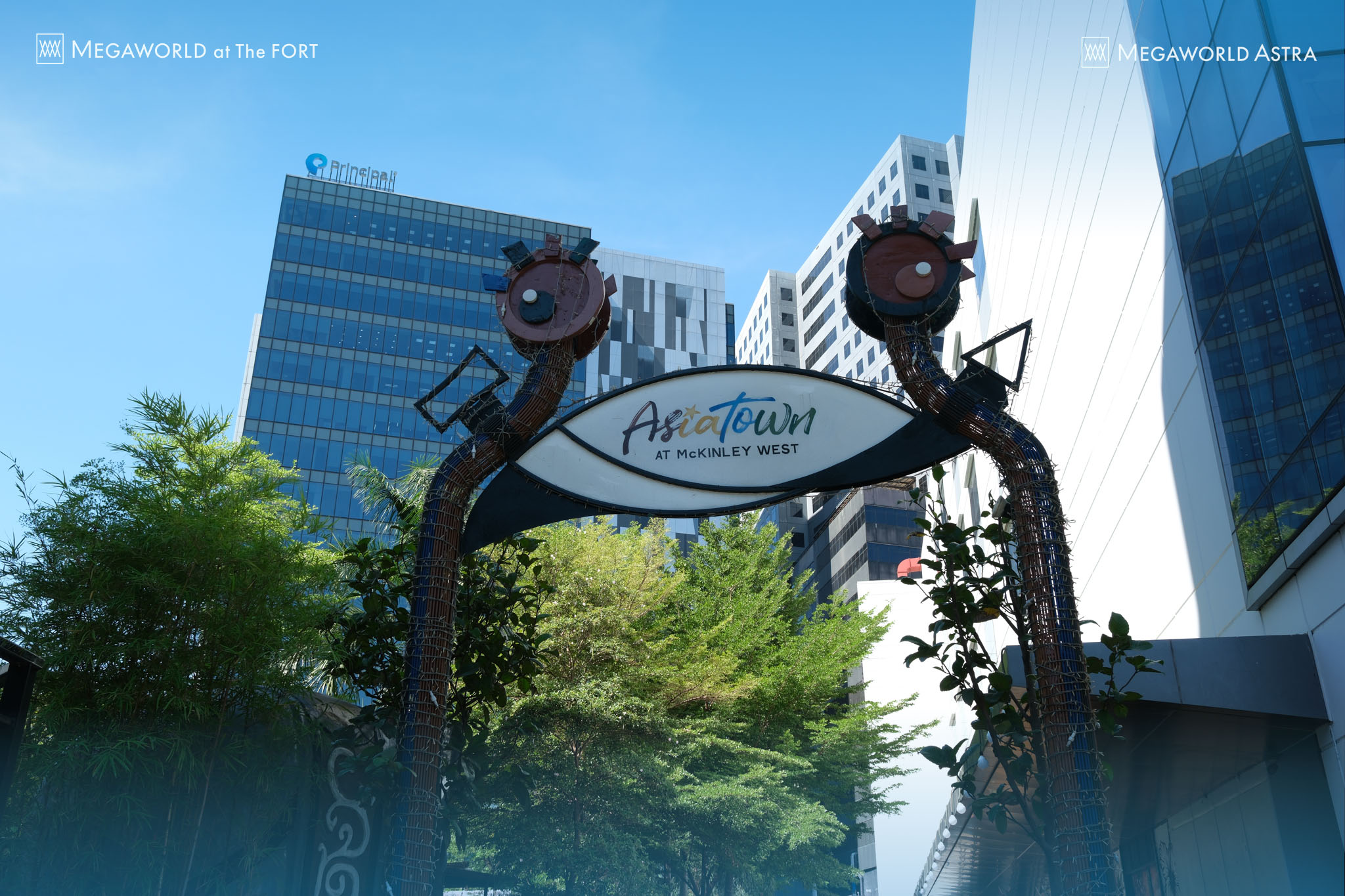
It also helps to be specific about what each label actually covers, because "Manila Bay" gets used loosely in marketing copy. The area most listings mean is Bay City, not the City of Manila itself — a stretch of reclaimed frontage that includes the SM Mall of Asia complex, the PAGCOR-licensed Entertainment City resort zone, and Aseana City. BGC, similarly, is often shorthand for the whole Fort Bonifacio footprint, which includes Uptown Bonifacio and McKinley West as sub-districts with their own texture. Knowing which sub-area a listing actually sits in matters more in Manila Bay than in BGC, because the Bay corridor's building stock varies more widely in age and finish from block to block.
How Do Entry Prices Compare Between the Two Districts?
This is the number most people actually came for, so here it is in one place before anything else.
| Metric (2026 estimates) | Manila Bay Area (Pasay/Paranaque) | BGC (Taguig) |
|---|---|---|
| Indicative price per sqm | PHP120,000-PHP215,000 | PHP170,000-PHP250,000+ |
| Studio buy price (approx.) | PHP4M-PHP7M | PHP4.5M-PHP8M |
| 1-bedroom buy price (approx.) | PHP6M-PHP12M | PHP8.5M-PHP20M |
| Typical 1BR rent | PHP30,000-PHP55,000/mo | PHP45,000-PHP75,000/mo |
| Condo vacancy (Q4 2025) | ~57% (highest in Metro Manila) | Low, premium demand |
Sources: Lamudi and Dot Property listings; Bamboo Routes and Colliers Philippines per-sqm and vacancy data, Q4 2025; cross-referenced with our own Living in BGC 2026 guide. Figures are 2026 market estimates that vary by tower, floor, and turnover status — treat as a planning range, not a quote.
Read the whole table, not just the top row. A studio or one-bedroom in Bay City can land meaningfully below its BGC equivalent, and that gap is exactly what draws attention. But the bottom row belongs in the same sentence as the top row: the district with the lower price is also the district clearing the city's largest inventory glut. That is not automatically a red flag — it is context a serious buyer needs before treating "cheaper" as "obviously smarter."
A lower price per square meter and a better deal are not automatically the same sentence.
The gap also shows up differently depending on whether you are buying or renting. A buyer comparing headline purchase prices sees the widest version of the gap, because BGC's per-sqm ceiling has kept climbing as its remaining inventory thins out. A renter sees a narrower version, because Manila Bay's high vacancy pushes landlords there to compete harder on asking rent than BGC landlords currently need to. Either way, pre-selling is the mechanism that makes either district's entry price genuinely reachable without a large lump sum — reserving a unit early and paying across the build rather than needing millions in cash on day one, a structure we walk through in the pre-selling condos in Manila guide.
What Do You Actually Get for the Money in Each District?
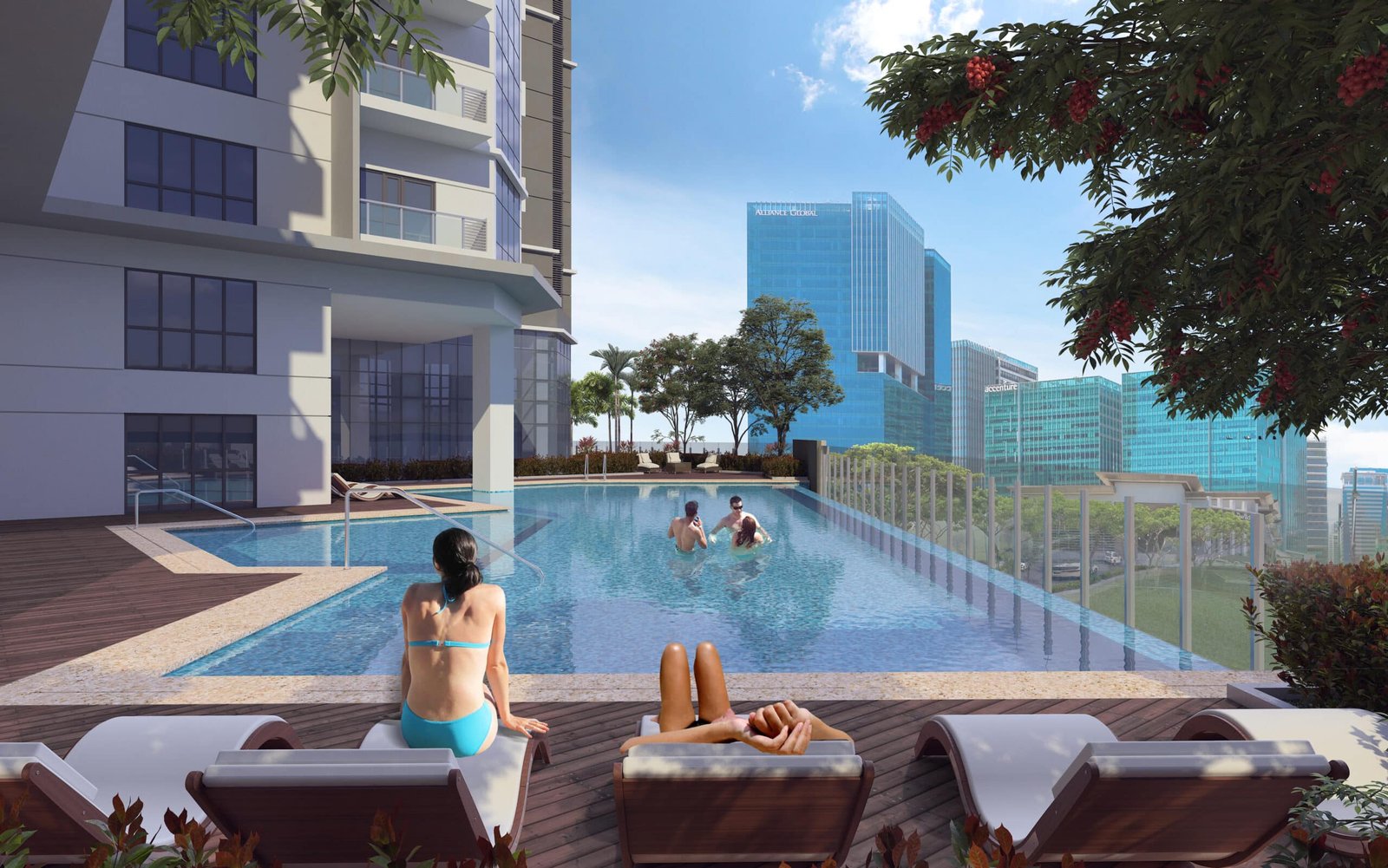
Price per square meter tells you the entry cost, not the product. In BGC, that money buys a finished, walkable master plan: office towers, international schools, a mature retail and dining strip along High Street, and — critically — essentially no vacant land left, which is part of why prices there have nowhere to go but up as the district fills in. Amenity decks in BGC's newer towers run deep: pools, gyms, function rooms, co-working spaces, and increasingly EV charging and pet-friendly design.
In Manila Bay, the same money buys proximity — to the mall, the casino-resort cluster, the waterfront, and NAIA — inside a district that is still filling in and still working through a large block of unsold or underleased inventory left by the departed offshore-gaming sector. Building stock in the Bay Area is a genuine mix of ages and amenity levels; you are not automatically buying a newer or better-equipped tower just because the price per square meter is lower. It is a different asset, not a discounted version of the same one.
Think of it as buying two different promises. BGC's promise is finish and certainty: a completed streetscape, a known commute, a school run that does not change year to year. Manila Bay's promise is potential and proximity: an airport run measured in minutes, a sunset most Metro Manila residents drive across town to see, and a mall complex large enough to be a destination in its own right. Both are legitimate reasons to buy — they are just not interchangeable ones, and conflating them is how a buyer ends up disappointed with a unit that technically delivered exactly what it promised.
Which District Has the Deeper, More Reliable Demand Base?
Here is the comparison's real center of gravity, and the place where BGC's higher price actually earns its keep. BGC's value rests on corporate offices and top international schools — demand that shows up five days a week, every week, and does not evaporate when one industry has a bad year. Manila Bay's demand base is tourism, gaming, and the rental market that orbits Entertainment City's resorts.
That base is real. Solaire, Okada Manila, City of Dreams, and the incoming Westside City resort together draw enormous foot traffic and employ a substantial workforce. But it is a narrower, more cyclical base than BGC's, and it was stress-tested hard already: when the government moved against Philippine offshore gaming operators and that tenant base left, Bay City's vacancy spiked to roughly 57%, the worst of any Metro Manila submarket. BGC has never faced anything close to that.
BGC's demand shows up every weekday and does not leave when one industry contracts. Manila Bay's does not have that same insulation yet.
That gap is also why the two districts attract different tenants. A BGC unit near the office corridor rents itself to a corporate professional on a one- or two-year lease, renewed as long as the job stays. A Manila Bay unit's natural tenant is a shorter-term profile — a gaming or hospitality worker, a short-stay visitor, or an airport-proximity renter — which is a real market, but a thinner and more turnover-prone one. Neither demand base is fake; they simply carry different amounts of insulation against a bad year.
What Does Daily Life Actually Feel Like in Each Place?
Strip out the investment math for a moment, because plenty of people are choosing between these two districts to actually live in one of them. BGC's daily texture is office-and-school walkability: High Street retail, a dense weekday lunch crowd, quiet residential pockets a few blocks off the main strip, and a commute that increasingly does not require a car at all.
Manila Bay reads differently. Life there orbits the bay, the mall, and the resorts — Mall of Asia's cinemas and seaside promenade, the Roxas Boulevard sunset, Entertainment City's dining and nightlife layer that no other Metro Manila district concentrates in one place. It is louder, more entertainment-forward, and organized around the airport in a way BGC is not; a 4 a.m. flight is a short cab ride from Bay City and a genuine ordeal from Taguig. Traffic on Roxas Boulevard and the airport corridor runs heavy, and this is reclaimed, low-lying coastal land, so flooding exposure is a real consideration a BGC buyer never has to think about.
Neither texture is objectively better; they suit different weeks. Someone who wants a quiet, predictable routine — gym before work, the same coffee shop, a school run that never changes — tends to prefer BGC's calmer interior blocks. Someone who wants a livelier, more entertainment-forward home base, doesn't mind heavier traffic on the main boulevard, and genuinely values being minutes from the airport tends to prefer what Manila Bay offers. It is worth spending an actual weekend in each district before committing to either one on the strength of a spreadsheet.
How Do the Two Districts Compare on Risk?
BGC's risk profile in 2026 is about as settled as Metro Manila real estate gets: established demand, low vacancy, and a completed master plan with no policy question hanging over its future footprint. Manila Bay carries two risks that are structural rather than cyclical, and a comparison piece that skips them is not being honest with you.
The first is the vacancy overhang already covered above — a market still clearing a specific, dated glut, not a permanent condition, but a real one today. The second is the reclamation question: most Manila Bay reclamation projects remain suspended under a national environmental review that, as of 2026, has not been resolved, and any future expansion of the district's western footprint depends on how that review lands. BGC's land, by contrast, is settled and fully built out — there is no equivalent policy risk sitting over its future.
None of that makes Manila Bay a bad place to buy. It makes it a place where the discount is doing real work — you are being paid, in a lower price, to carry risk BGC simply does not ask you to carry.
It is also worth naming what does not differ between the two: the legal protections around ownership. Both districts fall under the same national condominium law, the same 40 percent foreign-ownership cap per building, and the same title and registration process. The risk gap between Manila Bay and BGC is a market and policy risk gap — vacancy, demand cyclicality, and the reclamation review — not a difference in the underlying legal safety of owning a unit in either place.
Who Should Buy in the Bay Area, and Who Should Buy in BGC?
Buy in Manila Bay if you have a genuinely long horizon, you can hold through a soft rental market for years without needing the income, and either the waterfront-and-resort lifestyle fits you or you are treating this specifically as a patient, discounted entry. Pre-selling sharpens that case by lowering the cash needed upfront and spreading payments across construction — see our pre-selling condos in Manila guide for the mechanics.
Buy in BGC if you need reliable near-term rental demand, faster resale liquidity, or simply a settled, lower-risk address from day one — and you are comfortable paying more per square meter for that certainty. That is the trade-off in one sentence: BGC prices in stability; Manila Bay prices in patience.
Weighing a specific unit? We have live BGC inventory today, and we do not have live Manila Bay inventory. Tell us your budget and timeline and we will walk you through current BGC options — and, honestly, what Bay Area buyers are actually paying right now if that district still fits what you're after.
So, Manila Bay or BGC — Which Should You Actually Choose?
Neither district is the objectively correct answer; they are answers to two different questions. Manila Bay answers "how do I get the lowest entry price into a waterfront, master-planned district," with a real discount and a real risk stack attached. BGC answers "how do I buy into the most settled, deepest-demand address in Metro Manila," at a price that reflects exactly how settled it already is.
If you are still undecided, the honest tie-breaker is your time horizon and your tolerance for a market that can stay soft for a few more years. A five-plus-year holder with patience can make the Manila Bay math work; a buyer who wants a unit that rents easily and resells fast is generally better served in BGC, even at the higher price per square meter.
There is also a version of this decision that is not either-or. Some buyers use a lower-cost Manila Bay unit as a long-horizon holding purchase precisely because it frees up budget for a second, more settled address elsewhere — or they simply decide the district comparison matters less than the specific building, floor, and payment terms in front of them. The two districts are genuinely different products at genuinely different prices; the right call is rarely about which city block sounds better and almost always about what your own money and timeline can actually support.
Tell us your budget and what you actually need from the unit — income now, or a lower entry price you can be patient with — and we will point you at the district and the current BGC listings that actually match, rather than the one with the flashier headline.
Frequently Asked Questions
Is the Manila Bay Area actually close to BGC?
No. They are on opposite sides of Metro Manila's south corridor. Bay City sits in Pasay and Paranaque, fronting Manila Bay and Roxas Boulevard, while BGC sits inland in Taguig. A car trip between the two typically runs 30 to 60 minutes depending on traffic and the specific pickup point, which rules out casually splitting your week between them.
Which is cheaper, Manila Bay or BGC?
Manila Bay, on a per-square-meter basis. Bay Area condos run roughly PHP120,000 to PHP215,000 per sqm as a 2026 market estimate, against BGC's PHP170,000 to PHP250,000-plus. The gap is real, but part of it reflects Bay City's oversupply and roughly 57% vacancy rather than a purely earlier growth stage.
Is Manila Bay a good alternative to BGC for someone who wants attainable pricing?
It can be, if the lifestyle genuinely fits and the buyer treats any appreciation as a bonus rather than a plan. Manila Bay's lower entry price is real; so is its thinner demand base and unresolved reclamation review. BGC costs more because its demand is deeper and more settled, not because the Bay Area is a mistake.
Why does BGC cost more than Manila Bay per square meter?
BGC's pricing reflects two decades of corporate office towers, international schools, and a completed, walkable master plan with essentially no vacant land left to build on. Manila Bay is still absorbing a vacancy overhang left by the departed offshore-gaming sector, and its expansion depends on a reclamation review that remains unresolved in 2026.
Does Manila Skyline Condos sell condos in the Manila Bay Area?
No. Our live inventory sits in BGC and Northwin Global City in Bulacan. We do not have a listing in Manila Bay, and we route any Bay Area interest to a direct conversation at /contact rather than pointing you at a listing we do not actually have.
Is Manila Bay riskier to buy in than BGC?
In the ways that show up in a spreadsheet, yes. Bay City carries roughly 57% condo vacancy, the highest of any Metro Manila submarket, and its westward reclamation expansion is paused under a national environmental review. BGC carries essentially none of that risk today, which is exactly why it costs more.
What is the lifestyle difference between Manila Bay and BGC?
BGC is a walkable, office-and-school district built around weekday routine, high streets, and a settled dining scene. Manila Bay is a waterfront entertainment belt organized around a mega-mall, an integrated-resort cluster, and the airport, with a livelier but less domestic daily texture.
Can foreigners buy a condo in either the Manila Bay Area or BGC?
Yes, in both. Under the Condominium Act, a foreign buyer can own a unit outright in their own name in any Philippine condominium project, provided total foreign ownership in that specific building stays at or below 40 percent. The 40 percent cap applies district by district, not city-wide.
Should a first-time buyer choose Manila Bay or BGC?
It depends on what the buyer is optimizing for. A first-time buyer chasing the lowest entry price and comfortable holding for years might lean Bay Area; one who wants a settled, liquid, easier-to-rent-out unit from day one is usually better served in BGC, even at a higher price per square meter.
Is Manila Bay really the next BGC?
It is a long-horizon thesis, not a description of where the district stands today. Manila Bay shares BGC's master-planned, reclaimed-land structure and a genuine economic anchor in Entertainment City, but its demand base is more cyclical and its vacancy is far higher. Treat the comparison as a bet on convergence, not a current fact.
Sources
District, pricing, vacancy, and geography facts in this guide were cross-checked against the sources below and against our own previously published Manila Bay Area and BGC guides. All condo price, rent, and vacancy figures are 2026 market estimates that vary by building and shift over time; appreciation is never guaranteed for either district.
- Manila Bay Area location, entry pricing, vacancy (~57%, Q4 2025), reclamation status — cross-referenced with our own Manila Bay Area 2026 guide and Why Investors Are Watching the Manila Bay Reclamation District, both citing Colliers Philippines via BusinessWorld: https://www.bworldonline.com/corporate/2026/02/03/728047/manila-condo-oversupply-seen-keeping-vacancy-high-this-year-colliers/
- Manila Bay Area definition, Entertainment City, SM Mall of Asia, Roxas Boulevard — Entertainment City (Wikipedia): https://en.wikipedia.org/wiki/Entertainment_City
- BGC pricing, demand base, master-plan status — cross-referenced with our own Living in BGC 2026 guide, sourced to Lamudi, Hoppler, and Colliers.
- Manila Bay reclamation suspension and DENR review status — Presidential Communications Office: https://pco.gov.ph/news_releases/denr-to-conduct-thorough-review-of-manila-bay-reclamation-projects-following-pbbms-suspension-on-all-projects/
- Bonifacio Global City background — Bonifacio Global City (Wikipedia): https://en.wikipedia.org/wiki/Bonifacio_Global_City
- Condominium Act (RA 4726) — foreign ownership rules — LawPhil: https://lawphil.net/statutes/repacts/ra1966/ra_4726_1966.html
Note on verification. Entry-price ranges, vacancy figures, and reclamation status for the Manila Bay Area are drawn from our own previously verified Manila Bay Area 2026 and Manila Bay reclamation guides, both of which cite Colliers Philippines, government sources, and listing platforms directly. BGC figures are drawn from our own verified Living in BGC 2026 guide. No live Manila Bay property was named or linked in this piece, and no Taguig or Bulacan property was described as being in the Manila Bay Area — both districts' CTAs route to /contact where inventory does not currently exist on this site.
About the Author
MSC Editorial is the in-house editorial team of Manila Skyline Condos, tracking Metro Manila neighborhoods, entry pricing, and live condo inventory across the Philippines using primary developer, brokerage, and government sources.
A Quick, Honest Disclaimer
This guide is general information, not financial or investment advice. Condo prices, rents, and vacancy figures for both districts are 2026 market estimates that vary by building and change over time; appreciation is never guaranteed for either district. Before deciding, confirm current figures with a licensed Philippine real estate broker.
