
New Manila Int'l Airport (Bulacan): Impact on Condo Buyers
The New Manila International Airport (Bulacan): What It Means for Condo Buyers
By MSC Editorial — the in-house editorial team of Manila Skyline Condos, tracking Philippine infrastructure timelines, the Bulacan growth corridor, and live condo inventory across the Philippines.
An airport doesn't move condo prices by existing on a map. It moves them when the runway is actually poured, the access road actually opens, and the jobs it creates actually show up on a payroll. Everything else is a press release. The New Manila International Airport rising on the Bulacan coast has generated a lot of the second kind of coverage and, as of 2026, a real but early amount of the first. For anyone weighing a unit near Northwin Global City on the strength of "the airport is coming," the useful exercise is separating what's confirmed from what's still a target — and being honest about which one is doing the heavy lifting in the sales pitch.
This guide does that separating in one place, section by section: what's actually under construction today, how far the airport site really sits from Northwin Global City and 9 Central Park, why the corridor's investment case rests on three infrastructure projects rather than one, what a realistic construction timeline and its risks look like, and what a grounded — not promotional — read on future appreciation actually supports. Every date in this guide is marked as a target, not a fact, because Philippine infrastructure megaprojects have a documented history of slipping, and treating an announced date as a guarantee is how buyers end up disappointed years after they've already closed.
Key Takeaways
- The airport is real and under construction, not a proposal — but its opening date is a target, not a fact.
- Developer: San Miguel Corporation, through subsidiary San Miguel Aerocity Inc., building in Bulakan, Bulacan — not at Northwin itself.
- Distance from Northwin Global City / 9 Central Park: roughly 20 minutes by road, not walking distance and not the same municipality.
- The airport is one of three catalysts, not the whole thesis — MRT-7 and NLEX matter as much, or more, for daily life.
- Delays have already happened once — the 2023 Manila Bay reclamation halt is proof the timeline can slip; land, financing, administrative, and construction risk could each affect it again.
- Appreciation is a thesis, not a promise. Philippine infrastructure timelines have a documented history of slipping; treat every date here as "targeted," never "guaranteed."
Quick orientation: This guide focuses on the New Manila International Airport itself and its distance from Northwin Global City. For the fuller Bulacan corridor picture — NLEX, MRT-7, and daily life north of Manila — see the Living North of Manila pillar guide. For the separate, reclamation-driven growth story along Metro Manila's own bay frontage, see the Manila Bay area guide.
What Is the New Manila International Airport, and Is It Actually Being Built?
Start with the project itself, stripped of marketing language. The New Manila International Airport (NMIA) — also called the Bulacan Airport or San Miguel Aerocity — is being developed by San Miguel Corporation, through its subsidiary San Miguel Aerocity Inc., on reclaimed and developed land along Manila Bay in the barangays of Taliptip and Bambang, in the municipality of Bulakan, Bulacan. The project runs under a 50-year build-operate-transfer (BOT) agreement with the Philippine government — meaning San Miguel builds and operates the airport for a defined concession period before it eventually transfers to the state, a financing structure the government has used on other major infrastructure to avoid funding the full capital cost from the national budget directly.
The scale is genuinely large. Phase 1 is designed for roughly 35 million passengers a year, with two parallel runways and a terminal building sized around 240 boarding gates; the full build-out is planned to scale toward 100 million passengers annually across later phases — a capacity aimed squarely at relieving the chronically congested Ninoy Aquino International Airport (NAIA) in Parañaque and Pasay, which has operated well past its designed capacity for years. Land development along the shoreline was largely completed by the end of 2025, and terminal construction was reported to begin moving from earthworks into vertical building from early 2026. Those facts — real land, a named single developer, a signed government concession — are why this project reads differently than a decade-old proposal still on paper. What isn't confirmed is a hard opening date for Phase 1, or a firm date for any phase beyond it, and that distinction runs through the rest of this guide.
How Far Is Northwin Global City From the Airport Site, in Practice?
Proximity is where a lot of marketing copy gets loose, so it's worth being precise. 9 Central Park, the anchor tower inside Northwin Global City, sits in the Marilao–Bocaue area of Bulacan — roughly 20 kilometers north of Metro Manila and about 20 minutes by road from the NMIA site in Bulakan. That's a real, driveable distance within the same province, not an adjacent-lot relationship. It's close enough that a functioning airport would plausibly draw jobs, logistics demand, and hospitality development into the wider Bulacan corridor Northwin sits in — and far enough that no one should describe 9 Central Park as "airport-adjacent" the way a hotel across the street from NAIA's terminal would be. The honest framing is "same growth corridor," not "next door" — and it's worth repeating, because this is the single most common exaggeration in how the airport gets marketed to buyers north of Manila.
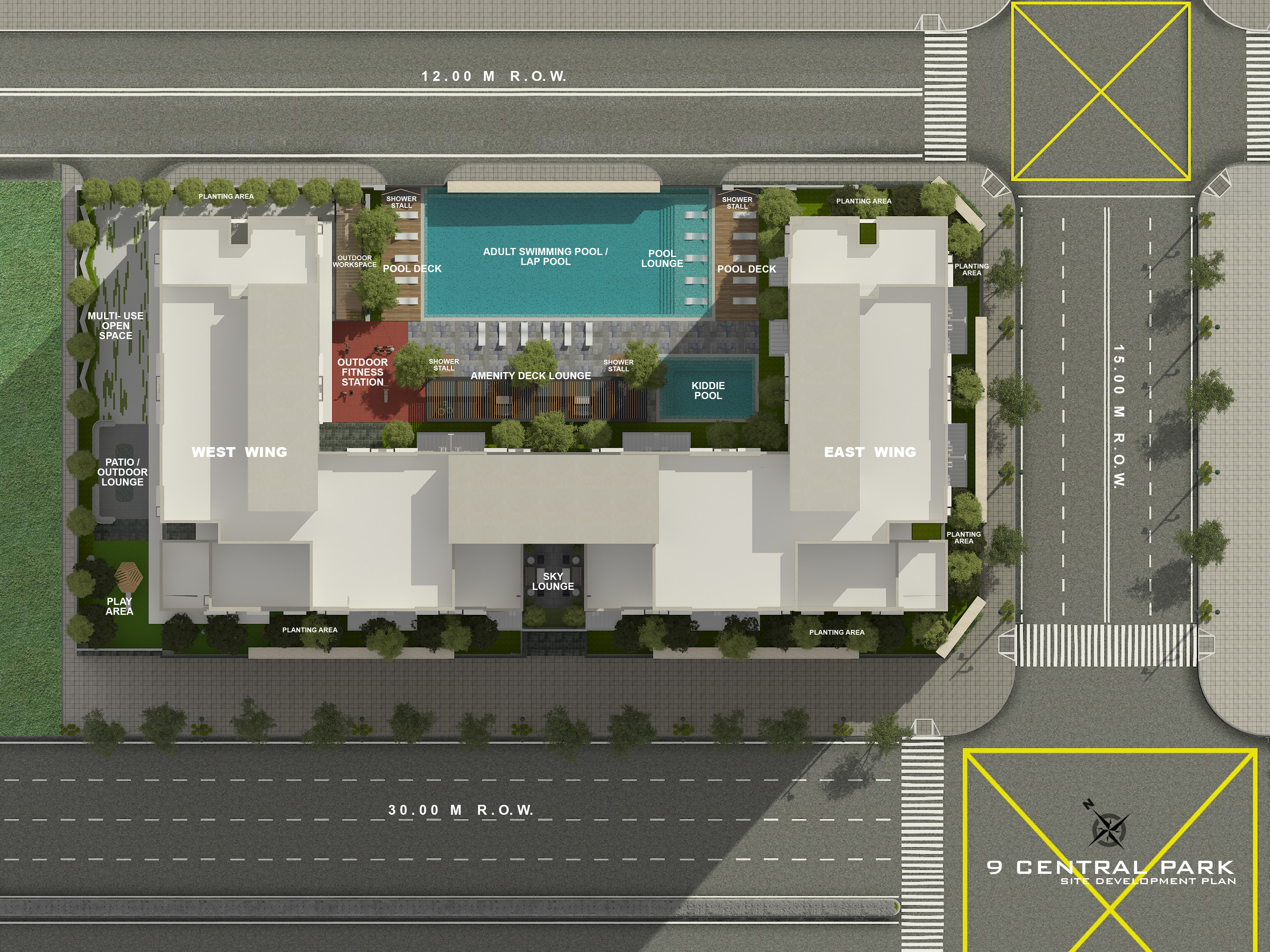
The honest framing is 'same growth corridor,' not 'next door.'
What Are the Three Infrastructure Catalysts Driving This Corridor?
NMIA is the loudest catalyst, but it isn't the only one, and treating it as a solo story overstates the case. The corridor Northwin sits in rests on three legs, each at a different stage of completion:
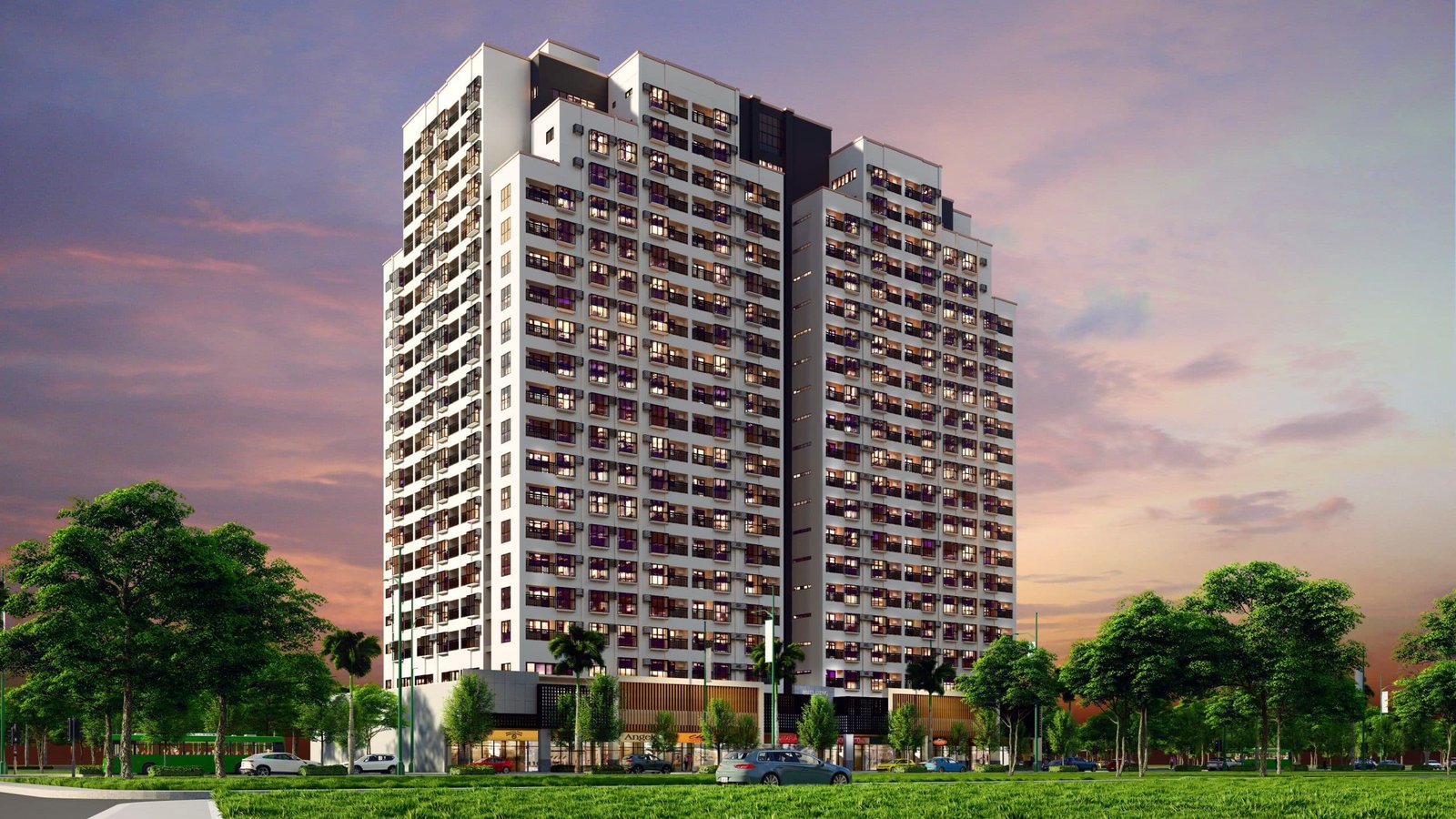
- NLEX — the six-lane expressway that already connects Bulacan to Metro Manila, with the Marilao exit about five minutes from Northwin. This is the leg that's actually finished and doing daily work today.
- MRT-7 — the elevated rail line ending in San Jose del Monte, Bulacan, reported around 86% complete as of 2026, with partial Quezon City–Caloocan operations targeted for the second quarter of 2027 and the full line, including the Bulacan stations, targeted for 2028.
- The New Manila International Airport — the future driver, not a daily commute tool, and — per the timeline breakdown below — the furthest of the three from completion.
None of these three catalysts individually makes the investment case. Together, they describe an area where transport access is compounding from three directions at once — a materially different setup than a single, isolated infrastructure promise resting on one project's schedule. The fuller route picture, including NLEX and MRT-7 specifics, is covered in the Living North of Manila pillar guide.
Together, the three catalysts describe an area where transport access is compounding from three directions at once — not a single infrastructure promise carrying the whole thesis.
What Does the NMIA Construction Timeline Actually Look Like?
The clearest way to see what's real and what's still aspirational is to lay the project out in phases, using only the dates and milestones already reported by DOTr, San Miguel, and the sources cited at the end of this guide. Treat every date in this table as a target, not a confirmed fact — Philippine infrastructure megaprojects, including this one, have a documented history of slipping past their original schedules.
| Project phase | Reported status / target | How solid is this date? |
|---|---|---|
| Shoreline land development (reclamation) | Largely completed by end of 2025 | Already happened — the most confirmed milestone in the project |
| 2023 reclamation halt | Government order paused Manila Bay reclamation activity, disrupting the sand supply the land phase needed | Confirmed — proof the timeline has already slipped once |
| Terminal construction (vertical build) | Reported to begin moving forward from early 2026 | Reported milestone, not independently verified as complete |
| Phase 1 operational target (~35M passengers/year) | Targeted for around November 2028 | Official target only — not a guarantee, and the project has already absorbed delays |
| Full build-out (up to ~100M passengers/year) | No official date announced beyond Phase 1 | Undefined — treat as a multi-phase, multi-year horizon with no fixed year attached |
Sources: New Manila International Airport (Wikipedia); Philstar reporting on DOTr's Bulacan airport terminal construction timeline (full citations below). Every date above is a project target, not a confirmed fact — confirm current status directly before treating any of these as settled.
On the dates in this table: a target date is not a confirmed fact. NMIA's Phase 1 timeline has already absorbed one documented delay — the 2023 halt on Manila Bay reclamation — and large Philippine infrastructure projects routinely slip further before completion. Plan around the possibility the date moves, not around the date itself.
What Could Still Delay or Change the Airport's Timeline?
It's worth naming the categories of risk plainly, instead of leaving "infrastructure projects sometimes slip" as a vague disclaimer. Four kinds of risk are relevant here, and none of them are unique to NMIA — they're the same categories that have affected MRT-7, the Metro Manila Subway, and most large Philippine infrastructure builds of the last two decades.
The first is land and environmental risk — the 2023 government-ordered halt on Manila Bay reclamation activity already happened once, disrupting the sand supply the shoreline development phase needed, and any future environmental or community review could, in principle, do the same again. The second is financing and scope risk: San Miguel Corporation has already made financing and scope adjustments typical of a build this size, and a project spanning multiple phases over a decade-plus horizon is inherently exposed to the cost of materials, labor, and capital shifting under it. The third is administrative and regulatory risk — a project this large depends on multiple national agencies staying coordinated across what will likely be more than one presidential administration before full build-out is reached, and Philippine infrastructure has a track record of projects slowing when political priorities shift. The fourth is simply ordinary construction risk — weather, supply chains, and the reality that a terminal building sized around 240 gates and two parallel runways is a multi-year physical build, not a switch that flips on a target date.
None of this means NMIA won't open, or won't open close to its Phase 1 target. It means a buyer treating "November 2028" as a locked date — rather than the current best estimate — is taking on risk they may not fully realize they're taking on.
It also helps to size the risk correctly rather than dismiss it. A one- or two-year slip on Phase 1 changes the timing of any appreciation thesis tied to the airport, but it does not erase the fundamentals that make the corridor work on its own — NLEX access is already built and operating today, and that part of the case does not depend on NMIA at all. The airport risk mainly matters to buyers who are counting on the airport specifically, and specifically on its earliest plausible date, to make the numbers work. For buyers whose numbers already work off NLEX and attainable pre-selling pricing, a delayed airport is a missed bonus, not a broken thesis.
The pattern across NMIA and MRT-7 is consistent: real construction, real money, real government backing — and dates that move.
Has Airport-Driven Growth Actually Raised Property Values in the Philippines Before?
It's fair to ask whether a new airport actually changes property values nearby, and the honest answer is: airports have historically catalyzed the areas around them, but the exact appreciation numbers for NMIA specifically don't exist yet — the airport isn't open. What's citable is the pattern, not a percentage.

Clark International Airport in Pampanga is the clearest Philippine precedent for what an operating airport can anchor over time: it grew out of the former Clark Air Base into a functioning civilian and cargo gateway, and the surrounding Clark Freeport and Clark Global City area developed into a mixed commercial, logistics, and residential zone specifically because the airport gave the location a reason to build around. NAIA itself, decades earlier, anchored the commercial and residential density that now defines large parts of Parañaque and Pasay — again, a slow build tied to the airport's decades of continuous operation, not an overnight repricing.
The takeaway for a Bulacan buyer isn't "expect the same percentage gain Clark or NAIA-area properties saw." No verified, apples-to-apples figure exists for that comparison, and quoting one would be a fabricated number. The honest takeaway is structural: airports that actually open and actually run tend to pull commercial and residential development toward them over years, and NMIA's scale — designed toward 100 million annual passengers at full build-out — is large enough to plausibly repeat that pattern in Bulacan, if and when it opens on anything close to schedule.
Worth flagging while on the subject of Manila Bay: the reclaimed shoreline NMIA sits on in Bulakan is technically part of the broader Manila Bay foreshore, but that's a separate growth story from Northwin Global City's inland Bulacan location — and a separate story again from the reclamation-driven Manila Bay area growth corridor closer to Metro Manila proper, which we cover on its own, along with what it currently costs to live in that corridor.
What's citable is the pattern, not a percentage.
Who Should — and Shouldn't — Buy on the Airport Thesis Alone?
Buying near Northwin on the strength of "the airport is coming" only makes sense for a specific buyer profile, and it's worth being direct about who that isn't.
The airport thesis fits you if: you're already sold on the north corridor for its own reasons — attainable pricing, space, the existing NLEX commute — and you view NMIA as a bonus catalyst on top of a decision you'd make anyway; or you have a multi-year investment horizon and can tolerate the airport's timeline sliding without it changing your plans.
It doesn't fit you if: the airport opening on schedule is the entire reason you're buying, with no fallback thesis if it's delayed past 2028; you need short-term liquidity or a quick resale, since Northwin's resale market is still unproven regardless of airport progress; or you're a foreign buyer weighing this specifically as your first Philippine purchase — start with whether foreigners can buy a condo in the Philippines before layering an infrastructure bet on top of ownership basics. For the affordability mechanics that make a pre-selling unit like this reachable in the first place, see the pre-selling condos in Manila guide. Either way, decide on the corridor first and treat the airport as a bonus, not the other way around — that ordering is what separates a buyer who is comfortable a year from now regardless of the airport news cycle from one who isn't.
The Thesis, Not the Guarantee
NMIA is a real, large, currently-under-construction airport with a named developer, a defined site, and government backing — that much is fact. Its exact opening date, and the precise scale of any appreciation it produces nearby, are not facts yet; they're targets and a reasonable historical pattern, respectively.
The buyers who do well on this corridor are the ones who'd be comfortable owning here even if the airport lands a year or two late.
Because the unit, the pricing, and the existing NLEX access already worked for them on day one. The airport is the upside case, not the foundation.
Talk to us about your budget and timeline and we'll walk through the current 9 Central Park terms — including how typical condo payment terms work — alongside where the airport, MRT-7, and the wider corridor actually stand today, not the marketing version.
About the Author
MSC Editorial is the in-house editorial team behind this guide — the house editorial brand for Manila Skyline Condos. The team researches Philippine condo buying, financing, and neighborhoods using primary legal and developer sources, tracking transit and airport project status against official government and developer reporting.
A Quick, Honest Disclaimer
This guide is general information, not financial or investment advice. Infrastructure dates for the New Manila International Airport and MRT-7 are official targets subject to delay; large Philippine infrastructure projects have a documented history of slipping. Nothing here should be read as a guarantee of future appreciation, completion, or opening date. Condo pricing and payment terms referenced for 9 Central Park are indicative and should be confirmed directly — contact us for current terms.
Frequently Asked Questions
Is the New Manila International Airport actually being built, or is it still a proposal?
It is under construction, not a proposal. San Miguel Corporation is developing it in Bulakan, Bulacan, and land development along the Manila Bay shoreline was largely completed by the end of 2025, with terminal construction moving forward from early 2026. The project has a named single developer, a defined site, and a 50-year build-operate-transfer agreement with the government.
How far is Northwin Global City / 9 Central Park from the new airport?
About 20 kilometers north of Metro Manila and roughly a 20-minute drive from the NMIA site in Bulakan — the same general Bulacan growth corridor, but not adjacent to the airport itself.
When will the airport open?
Phase 1 is targeted to be operational around November 2028. That is an official target, not a guarantee — the project has already absorbed delays, including a 2023 halt on Manila Bay reclamation that affected the land development timeline, so treat the date as aspirational.
Will the airport make Bulacan condos worth more?
There's a reasonable historical pattern for this — airports like Clark International and NAIA have anchored commercial and residential growth in the areas around them over years of continued operation. But no verified appreciation figure exists yet for NMIA specifically, since it isn't open. Treat the upside as a thesis tied to the airport actually opening and operating, not a guaranteed number.
Should I buy near Northwin Global City just because of the airport?
Only if you'd be comfortable owning there even if the airport's timeline slips. The stronger case rests on the corridor's existing fundamentals — NLEX access and attainable pre-selling pricing — with the airport, and MRT-7, as additional upside rather than the sole reason to buy.
What other infrastructure matters besides the airport?
NLEX, the six-lane expressway already linking Bulacan to Metro Manila, is the leg doing daily work today. MRT-7, an elevated rail line ending in San Jose del Monte, Bulacan, was around 86% complete as of 2026, with the Bulacan stations targeted for 2028. Together with the airport, these form the corridor's three infrastructure catalysts.
Who is actually building and funding the New Manila International Airport?
San Miguel Corporation, through its subsidiary San Miguel Aerocity Inc., is building NMIA under a 50-year build-operate-transfer (BOT) agreement with the Philippine government. That structure means San Miguel finances and operates the airport for a defined concession period rather than the government funding the full build directly — a single named private developer, not a government-only project.
What could cause NMIA's timeline to slip further?
Four risk categories matter: land and environmental risk (a 2023 government halt on Manila Bay reclamation already disrupted the sand supply once), financing and scope risk (the project has already seen adjustments typical of a build this size), administrative risk (coordination across multiple agencies and, likely, more than one presidential administration before full build-out), and ordinary construction risk. None of these are unique to NMIA — they're the same categories that have affected MRT-7 and most large Philippine infrastructure builds.
Is 9 Central Park part of the New Manila International Airport development?
No. They are related but separate. NMIA is being built by San Miguel Corporation on reclaimed land in Bulakan, on the Manila Bay coast. 9 Central Park and Northwin Global City are a Megaworld township about 20 kilometers north of Metro Manila in the Marilao–Bocaue area of Bulacan, roughly a 20-minute drive from the airport site — the same general growth corridor, not the same project or the same location.
What is NMIA's planned passenger capacity?
Phase 1 is designed for roughly 35 million passengers a year. The full build-out across later phases is planned to scale toward roughly 100 million passengers annually, a capacity aimed at relieving NAIA's chronic congestion — but no official date has been announced for that full build-out beyond the Phase 1 target.
Sources
Infrastructure and project facts in this guide were verified against the sources below (all curl-checked HTTP 200 on 2026-07-08). Appreciation claims are framed as historical pattern/analysis, not fabricated figures — no specific appreciation percentage is asserted for NMIA, since it is not yet open.
- New Manila International Airport — developer (San Miguel), Bulakan location, land development ~complete end-2025, terminal construction from early 2026, Phase 1 ~Nov 2028 target, 35M→100M passenger capacity, BOT terms, reclamation/sand delays — New Manila International Airport (Wikipedia): https://en.wikipedia.org/wiki/New_Manila_International_Airport (200) ; Philstar (DOTr, terminal construction Jan 2026): https://www.philstar.com/business/2025/05/14/2442874/dotr-bulacan-airport-terminal-starts-construction-january-2026 (200)
- MRT-7 — 22 km, 14 stations, North Avenue to San Jose del Monte (Bulacan), ~86% complete, partial ops ~Q2 2027, full line incl. Bulacan stations 2028 — MRT Line 7 (Wikipedia): https://en.wikipedia.org/wiki/MRT_Line_7_(Metro_Manila) (200) ; Tribune (full route to finish 2028, SJDM station stays): https://tribune.net.ph/2026/05/31/dotr-debunks-sjdm-station-removal-from-mrt-7-says-full-route-to-be-finished-in-2028 (200) ; Philstar (DOTr eyes MRT-7 partial operations): https://www.philstar.com/nation/2026/02/20/2509170/dotr-eyes-mrt-7-partial-operations (200)
- Northwin Global City & 9 Central Park — Bulacan (Marilao-Bocaue), ~20 km north of Metro Manila, ~20 min to NMIA site — Megaworld 9 Central Park: https://www.megaworldcondo.com/9-central-park (200) ; Megaworld Northwin Global City: https://megaworldcondo.com/northwin-global-city/ (200) ; Property Report (Northwin groundbreaking, Bulacan): https://propertyreport.ph/news-and-events/2024/07/12/34816/megaworld-northwin-global-city-groundbreaking-in-bulacan/ (200)
- 9 Central Park status/pricing — Northwin Global City, Bulacan · Pre-selling · from ~₱10,000/mo · 478 units — VERIFIED-BUILDING-SPECS.md (cross-checked Megaworld sources, 2026-06-07); price/promo figures are indicative marketing-source estimates, not quotes.
- Historical airport-driven growth precedent (used for analysis framing only, no appreciation numbers asserted) — Clark International Airport (Wikipedia): https://en.wikipedia.org/wiki/Clark_International_Airport (200) ; Ninoy Aquino International Airport (Wikipedia): https://en.wikipedia.org/wiki/Ninoy_Aquino_International_Airport (200)
- Marilao (locality reference for Northwin Global City Place schema) — Marilao (Wikipedia): https://en.wikipedia.org/wiki/Marilao (200)
- Property page (link target): 9 Central Park — Northwin Global City, Bulacan (Megaworld): https://manilaskylinecondos.com/properties/9-central-park
Note on verification: NMIA's developer (San Miguel), Bulakan location, and Phase 1 ~November 2028 operational target are reported by Philstar and Wikipedia — the exact opening date is a TARGET that has already slipped once (the 2023 reclamation halt) and is not guaranteed. MRT-7's ~86% completion and 2027 (partial)/2028 (full) timelines are official DOTr targets per Tribune and Philstar. The Clark/NAIA references are used only to support the general, cited claim that operating airports have historically anchored nearby development over years — no specific appreciation percentage for NMIA or the Bulacan corridor is stated anywhere in this piece, since none is verifiable pre-opening. One source cited in the P7-01 pillar's Sources list (manilatimes.com) returned no response (timeout) during this session's live curl checks and was NOT reused here for that reason — Philstar's matching report was used instead as the verified primary source for the same fact.
