
Hidden Costs of Buying Pre-Selling and How to Budget for Them
Hidden Costs of Buying Pre-Selling in the Philippines and How to Budget
By MSC Editorial — the in-house editorial team of Manila Skyline Condos, tracking developer computation sheets, buyer-protection law, and closing-cost mechanics across Metro Manila pre-selling inventory.
The reservation fee, the staggered down payment, and the turnover balance are the three numbers every buyer memorizes. They are also not the full price. On top of that three-stage schedule sits a second, smaller list of costs — notarial fees, transfer taxes, move-in charges, association dues, loan fees — that never appears in the headline monthly figure a developer markets. None of these costs are secret; they are simply collected at different moments than the payment schedule itself, which is exactly why buyers who only budget the three headline stages get caught short the month the building turns over.
This guide is the dedicated breakdown of that second list, organized by when each cost actually lands: at reservation, during construction, at turnover, and every year after. For the payment schedule itself — reservation fee, down payment, turnover balance — see how condo payment terms work in the Philippines. This guide picks up where that one leaves off, and pairs with pre-selling as an investment, the real risks for buyers weighing the full cost picture against expected returns.
Key Takeaways
- The contract price is not the closing price. Transfer taxes, registration fees, move-in charges, and loan fees sit on top of the reservation fee, down payment, and turnover balance — and none of them are optional.
- Transfer taxes are the single largest hidden cost — documentary stamp tax is commonly cited around 1.5% of the price or zonal value (whichever is higher), plus a local transfer tax in the 0.5%–0.75% range set by the LGU, both commonly-cited market figures to confirm per transaction.
- Association dues start at turnover, not during construction — billed per square meter monthly, and a larger unit carries a proportionally larger monthly due for as long as you own it.
- Financing the turnover balance adds its own cost layer — bank appraisal fees, mortgage registration fees, notarial fees on the loan documents, and fire or mortgage-redemption insurance bundled into amortization.
- Maceda Law protects installment payments toward the price — not these ancillary fees. Transfer taxes, dues, and loan costs are a separate financial obligation the refund provisions do not reach.
- A legitimate computation sheet itemizes every one of these costs in writing — an undocumented "miscellaneous" line is the red flag worth stopping on.
Quick orientation: This guide is part of the P3 Pre-Selling, Payments & ROI cluster. For the full pre-selling picture, start with the P3 pillar: Pre-Selling Condos in Manila 2026. For the three-stage payment schedule these extra costs sit on top of, see how condo payment terms work. Deciding between pre-selling and RFO first? See pre-selling vs RFO, which should you buy.
What Extra Costs Come on Top of the Reservation Fee, Down Payment, and Turnover Balance?
Four categories of cost sit outside the three-stage payment schedule, and each lands at a different moment: costs at reservation (notarial and documentary requirements), costs during construction (late-installment penalties, and occasionally a developer-specific insurance pass-through), costs at turnover (transfer taxes, registration, move-in and utility fees, an association move-in bond), and ongoing costs after turnover (association dues, real property tax, and — if financing — loan-related fees). None of these are hidden in the sense of being concealed. They are hidden in the sense that a buyer focused on the monthly construction-period figure rarely asks about them until the computation sheet lands in front of them at turnover.
The rest of this guide walks through each category in the order it hits your bank account, then closes with a sample itemized table, a budgeting framework, and the legal boundary of what Maceda Law does and does not protect.
What Do You Pay at Reservation and During the Construction Period?
The reservation fee itself — commonly ₱25,000–₱60,000, credited toward the contract price — is covered in the payment-terms guide linked above. What that guide does not detail is the paperwork layer around it. Signing the Contract to Sell is a notarized document, and notarization carries its own fee, typically a modest flat amount or a small percentage of the document's stated value, paid directly to the notary public or bundled into the developer's documentation charge. Buyers should also expect a documentary requirements list — valid government ID, proof of income, and, for buyers abroad, additional authorization paperwork. None of these carry a large individual price tag, but courier and notarization costs for a buyer signing from overseas add up to a real, if small, out-of-pocket cost during the reservation window.
During the 2-to-4-year construction window that follows, the recurring cost is the down-payment installment itself, but two secondary costs can appear alongside it — both developer-specific, not universal. The first is a late-installment penalty: most developers grant a short grace window, but a missed monthly payment commonly triggers a small percentage charge on the overdue amount per month late, separate from the longer Maceda Law grace periods covered later in this guide. The second is a construction-period insurance pass-through, and this is not a universal charge — some developers fold a builder's-risk cost into overall project financing rather than billing individual buyers; others itemize nothing of the sort. Ask the accredited sales team directly whether it applies to the specific tower rather than assuming it does. This is also where the compressed RFO timeline differs sharply from pre-selling: an RFO buyer skips this multi-year window entirely and moves straight to turnover costs within weeks of reserving.
The reservation fee locks the unit. The notarial and documentation costs around it are the price of making that lock legally binding — and they are almost never quoted in the marketing headline.
What Transfer Taxes and Registration Fees Are Due at Turnover?
Turnover is where the largest cluster of secondary costs lands, and transfer taxes sit at the top of that list by peso amount. Ownership transfer commonly involves two separate tax lines plus a registration fee, and all three are tied to the property's price or zonal value, not a flat peso amount.
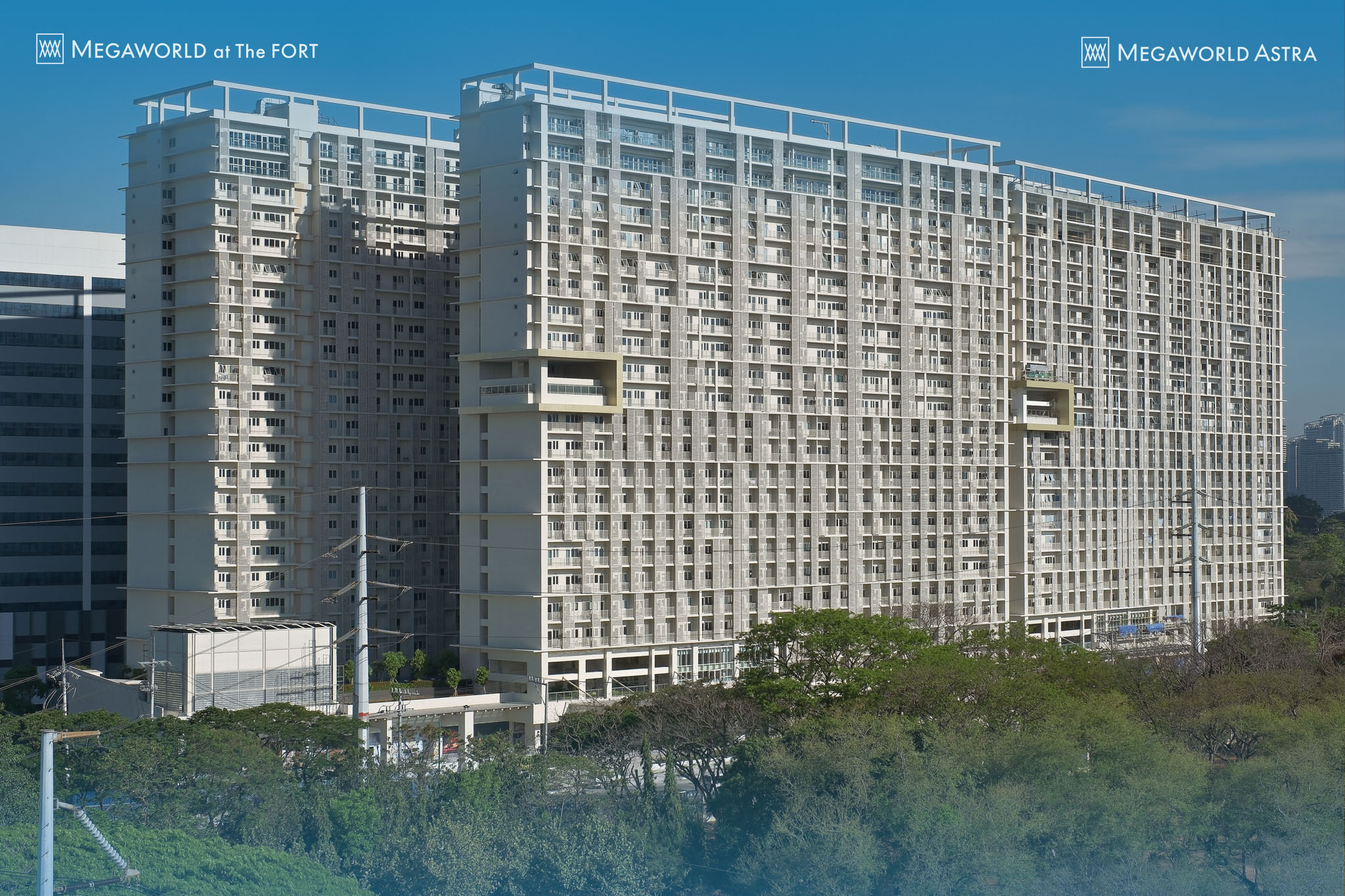
The documentary stamp tax (DST) is commonly cited at around 1.5% of the higher of the selling price or the property's zonal value, a rate widely referenced across Philippine property-transaction guidance. Treat that figure as a commonly-cited market rate rather than a number independently verified against the current BIR schedule for your specific transaction — confirm the applicable rate directly with the BIR or your closing team before budgeting a final number. The local transfer tax is a separate charge set by the city or municipality where the property sits, commonly cited in the 0.5%–0.75% range — because it is LGU-set, the exact rate varies by which city the building is in. On top of both taxes, the Registry of Deeds charges its own registration fee to record the new title, on its own sliding fee schedule tied to the property's value.
| Tax or fee | Commonly-cited basis | Who typically pays |
|---|---|---|
| Documentary stamp tax (DST) | ~1.5% of price or zonal value, whichever is higher (market-cited; confirm current BIR rate) | Buyer or developer, per Contract to Sell — confirm allocation |
| Local transfer tax | ~0.5%–0.75% of price or zonal value (LGU-dependent) | Typically buyer, confirm per project |
| Registry of Deeds registration fee | Sliding scale tied to declared property value | Typically buyer |
Who actually pays which of these is not standardized across the industry — some developers absorb DST into the package price; others pass all transfer costs to the buyer. This allocation is set in the Contract to Sell, and this exact moment is what a project's construction and turnover timeline is really counting down to — the point where the computation sheet stops being theoretical and becomes a bill.
Transfer taxes are calculated on price or zonal value, whichever is higher — not a number a buyer can shrink by negotiating the sale price alone. Confirm the applicable rate and who pays it before treating the contract price as the closing price.
What Move-In, Utility, and Move-In Bond Costs Hit at Turnover?
Alongside the tax cluster, turnover brings a second set of one-time charges that are developer-collected rather than government-collected.
- Move-in fee. A one-time fee charged by the developer or property management to cover the administrative and physical logistics of a unit move-in — elevator scheduling, security clearance, inspection coordination. This should appear as a specific line item, not a vague "processing charge."
- Utility connection and meter fees. Separate connection charges for the electricity meter (commonly Meralco in Metro Manila) and the water meter, due before the unit is livable, with the amount depending on the meter type and the provider's current connection schedule.
- Association move-in bond or deposit. Many buildings collect a refundable bond to cover damage to common areas during the physical move — refunded after a post-move inspection, but real cash out the door at turnover regardless.
- Unit inspection and acceptance costs. Buyers are entitled to a punch-list inspection before formally accepting the unit; the inspection itself typically carries no fee, but hiring an independent inspector on higher-value units is an optional out-of-pocket cost worth budgeting for.
- Parking slot, if sold separately. On several projects, a parking slot is not automatically bundled into the unit price and is a separate purchase with its own contract. Confirm whether parking is included before assuming a slot comes with the unit.
None of these figures are fixed nationally — they vary by developer, building, and unit size, which is why the itemized computation sheet at turnover should list each one by name rather than folding them into a single "miscellaneous fees" total.
What Ongoing Costs Continue Every Month and Every Year After Turnover?
Turnover is not the finish line on cost — it is the start of a new, recurring set of obligations that continue for as long as you own the unit.

Association dues begin at turnover, not during construction, and are billed monthly per square meter of unit floor area. Because the rate is per-sqm, a larger unit carries a proportionally larger monthly due — worth factoring into the size-versus-affordability decision at the point of purchase, not after moving in. Dues fund building upkeep, security staffing, common-area utilities, and the amenities marketed during the sales process, so they are not an optional line a buyer can skip.
Real property tax applies once the unit is titled in the buyer's name, assessed annually by the local government unit where the building sits, based on the assessed value the LGU assigns — typically lower than, and distinct from, the market price paid for the unit. The exact rate and assessment basis vary by city; see condo taxes and dues for foreign owners for the ownership-tax mechanics specifically, including how this differs for a non-resident title holder.
Fire and comprehensive unit insurance is the third recurring cost, and its status depends on whether the balance is financed. A cash buyer is not legally required to carry unit insurance, though many choose to. A buyer financing through a bank or Pag-IBIG loan will typically find fire and mortgage-redemption insurance bundled into the loan's requirements, covered next, making it effectively mandatory for the life of that loan.
The turnover balance ends a schedule. Association dues and real property tax start a new one — recurring, indefinite, and sized to the unit you bought, not the price you negotiated.
What Extra Fees Come With Financing the Turnover Balance?
If the turnover balance is settled through a bank mortgage or Pag-IBIG housing loan rather than cash, financing itself carries its own layer of cost on top of the interest rate and monthly amortization already covered in the payment-terms guide.
- Bank appraisal fee. Before approving a mortgage, the bank commissions an independent appraisal of the unit's value, and the buyer typically covers this upfront regardless of whether the loan is ultimately approved.
- Mortgage registration fee. Recording the mortgage against the title at the Registry of Deeds carries its own registration charge, separate from the transfer-tax registration fee — specific to the loan instrument, not the ownership transfer.
- Notarial fees on the loan documents. The mortgage agreement is a separate notarized document from the Contract to Sell, with its own notarization cost.
- Fire and mortgage-redemption insurance. Nearly every bank and Pag-IBIG loan requires fire insurance on the unit and mortgage-redemption insurance, which pays off the remaining balance if the borrower dies before the loan is settled. Both are typically bundled into the monthly amortization — see how to compute a full monthly amortization figure for the mechanics of building these into a realistic monthly number, and again in the itemized table below for how each fee lines up against the others.
Buyers choosing the developer's in-house financing route instead of a bank or Pag-IBIG loan typically face a lighter documentation burden and fewer of these upfront fees, but at the cost of the highest interest rate of the three financing routes — a trade-off worth weighing against the appraisal and registration costs of a bank loan, not just the headline rate.
What Does a Sample Itemized Closing-Cost Table Look Like?
Putting every category above into one table makes the full cost stack visible in a single view — the shape a legitimate computation sheet should take, even though the exact figures are project-specific. Pair this with the monthly amortization computation guide if you're financing the balance, since the two together are what a realistic post-turnover monthly number actually looks like.
| Cost category | When it's due | Typical basis | Who typically pays |
|---|---|---|---|
| Notarial fee, Contract to Sell | At reservation/signing | Flat or small % of contract value | Buyer |
| Late-installment penalty | During construction, if applicable | Small % of overdue amount/month | Buyer, only if late |
| Documentary stamp tax | At turnover/title transfer | ~1.5% of price or zonal value (market-cited) | Buyer or developer — confirm allocation |
| Local transfer tax | At turnover/title transfer | ~0.5%–0.75% (LGU-dependent) | Typically buyer |
| Registry of Deeds registration | At turnover/title transfer | Sliding scale on declared value | Typically buyer |
| Move-in fee | At turnover | Flat, developer-set | Buyer |
| Utility connection (Meralco/water) | At turnover | Flat, provider-set | Buyer |
| Association move-in bond | At turnover | Flat, refundable | Buyer (refunded post-inspection) |
| Association dues | Monthly, from turnover onward | Per sqm of unit | Buyer (owner), ongoing |
| Real property tax | Annually, once titled | LGU-assessed value | Buyer (owner), ongoing |
| Bank appraisal fee | During loan application | Flat, bank-set | Buyer, if financing |
| Mortgage registration fee | At loan closing | Sliding scale on loan value | Buyer, if financing |
| Fire/mortgage-redemption insurance | Ongoing, bundled in amortization | Set by loan terms | Buyer, if financing |
Figures above are commonly-cited market ranges and typical structures, not a quote for any specific building. Confirm exact figures and payment allocation with the accredited sales team and, for tax rates, the relevant BIR and LGU offices, before treating any number as final.
How Should You Budget for These Costs Without Getting Caught Short?
The practical fix is treating these costs as their own budget line from day one, not an afterthought discovered at turnover. A workable framework: set aside a closing-costs fund equal to roughly 8%–10% of the contract price, built up alongside — not instead of — the down payment, so it is fully funded by the time turnover arrives. This applies whether your entry structure is a standard staggered down payment or a zero-down payment schedule — a zero-down promotion removes the equity installment, not the closing-cost stack that still lands at turnover.

Three habits make this fund realistic rather than aspirational. First, request the full itemized computation sheet at reservation, not turnover — a legitimate developer can show the transfer-tax allocation and move-in fee structure years before the building is finished, even if the exact peso amount shifts slightly with the final price. Second, keep the closing-costs fund separate from the down-payment fund entirely, even in the same account, so the turnover-balance financing decision never quietly eats into money set aside for taxes and fees. Third, revisit the fund annually during construction, since transfer-tax rates and LGU fee schedules can shift over a multi-year build. For whether the full cost stack still supports the investment case, see pre-selling as an investment: the real risks.
A closing-costs fund built alongside the down payment, not after it, is what separates a buyer who closes on schedule from one who scrambles for cash the month the building turns over.
Does Maceda Law Cover These Secondary Costs Too?
Maceda Law (RA 6552) is the buyer-protection statute most cited in Philippine pre-selling — grace periods and cash-surrender-value refunds if an installment buyer misses a payment or the contract is cancelled. It is worth being precise about its actual scope, because it is easy to over-extend what it covers.
Maceda Law protects installment payments made toward the purchase price — the reservation fee and down-payment installments specifically. If a contract is cancelled after at least two years of payments, the buyer is entitled to a grace period and a cash surrender value refund starting at 50% of total payments made. That protection is about the price of the unit itself.
Transfer taxes, registration fees, move-in charges, association dues, and loan-related costs are a separate financial obligation, not part of the installment price Maceda Law's refund provisions reach. If a buyer pays a registration fee or a move-in bond and the transaction later unwinds, those ancillary payments are not automatically covered by the same cash-surrender-value calculation that applies to price installments — the terms for those specific fees are governed separately, typically by the Contract to Sell's own clauses. Read those clauses specifically rather than assume Maceda Law's protections extend to every peso paid over the life of a purchase.
The same trust standard that applies to Maceda disclosures applies to every fee in this guide: a legitimate developer itemizes the documentary stamp tax, local transfer tax, registration fee, move-in fee, and loan-related costs individually, in writing, before asking for money tied to any of them — not folded into a single undocumented "miscellaneous" line. Reluctance to itemize a charge on request is the red flag worth stopping on, whether it appears at reservation, at turnover, or buried inside a loan's closing costs.
Maceda Law protects what you paid toward the unit. It does not automatically protect what you paid in taxes, fees, and dues around the unit — read the Contract to Sell's own terms for those, and ask for every fee in writing before you pay it.
Ask for a full, itemized closing-cost breakdown through our contact page before reserving a unit — not just the headline monthly figure. A specialist can walk through the transfer-tax allocation, move-in fees, and loan-related costs for the specific tower and unit size you're considering, alongside current terms for the pre-selling inventory covered across this site.
About the Author
MSC Editorial is the in-house editorial team behind this guide — the house editorial brand for Manila Skyline Condos. The team researches Philippine condo buying, financing, and closing-cost mechanics using primary legal and developer sources, cross-checking computation-sheet line items against buyer-protection law (RA 6552, PD 957) and publicly cited BIR and LGU tax structures.
A Quick, Honest Disclaimer
This guide is general information, not legal, tax, or financial advice, and nothing here is a guarantee of a final closing-cost figure. Transfer tax rates, LGU fee schedules, developer-specific charges, and loan-related fees vary by project, location, and buyer profile, and can change without notice. Before signing or paying anything, confirm the specifics with a licensed Philippine real estate broker, tax professional, and/or lawyer — contact us for current terms on a specific unit.
Frequently Asked Questions
What hidden costs come on top of the reservation fee, down payment, and turnover balance?
Notarial and documentation fees at reservation; possible late-installment penalties during construction; transfer taxes, registration fees, move-in and utility fees, and an association move-in bond at turnover; and ongoing association dues, real property tax, and loan-related fees after turnover if financing the balance.
How much is the documentary stamp tax on a Philippine condo purchase?
Commonly cited around 1.5% of the selling price or zonal value, whichever is higher. This is a widely referenced market figure, not independently verified against the current BIR schedule for every transaction — confirm the applicable rate with the BIR or your closing team before finalizing a budget.
Is the local transfer tax the same in every city?
No. Local transfer tax is set by the city or municipality where the property sits, commonly cited in the 0.5%–0.75% range of the price or zonal value. Because it is LGU-dependent, the exact rate varies by location and should be confirmed with that specific local treasurer's office.
When do association dues start, and how are they calculated?
Association dues start at turnover, not during construction, and are billed monthly based on the unit's square meterage. A larger unit carries a proportionally larger monthly due for as long as the unit is owned.
What extra fees come with financing the turnover balance through a bank or Pag-IBIG?
A bank appraisal fee, a mortgage registration fee at the Registry of Deeds, notarial fees on the loan documents, and fire and mortgage-redemption insurance, which is typically bundled into the monthly amortization rather than billed separately.
Does Maceda Law cover transfer taxes, move-in fees, or association dues?
No. Maceda Law (RA 6552) protects installment payments made toward the purchase price — the reservation fee and down-payment installments. Transfer taxes, registration fees, move-in charges, and association dues are a separate financial obligation not covered by Maceda's grace-period and cash-surrender-value refund provisions.
How much should I set aside for closing costs on top of the down payment?
A practical framework is a closing-costs fund equal to roughly 8%–10% of the contract price, built up alongside the down payment so it is fully funded by turnover. Confirm the specific developer's cost allocation, since this range is a general planning guide, not a guaranteed ceiling for every project.
Is a parking slot always included in the unit price?
Not always. On several projects a parking slot is sold separately with its own contract and payment schedule rather than being bundled automatically into the unit price. Confirm whether parking is included before assuming it comes with the unit.
Are there costs during the construction period besides the down payment?
Possibly two: a late-installment penalty if a monthly payment is missed, and — on some projects only, not universally — a construction-period insurance cost the developer may pass through. Neither applies to every project, so confirm directly with the accredited sales team for the specific tower.
How do I know if a fee on my computation sheet is legitimate?
A legitimate developer itemizes every cost by name — documentary stamp tax, transfer tax, registration fee, move-in fee, and loan-related costs individually — rather than folding them into an undocumented "miscellaneous" line. Reluctance to itemize a charge in writing is the red flag worth stopping on before paying it.
Sources
Legal and cost-structure facts in this guide were verified against the following sources. Tax-rate figures (documentary stamp tax, local transfer tax) are presented as commonly-cited market/industry figures per the disclosure pattern already used across this site's payment-terms guides, since exact current BIR schedules and LGU-specific transfer-tax ordinances should be confirmed directly for any individual transaction rather than treated as fixed nationally.
- Maceda Law (RA 6552) — full statute text (LawPhil): https://lawphil.net/statutes/repacts/ra1972/ra_6552_1972.html
- Presidential Decree No. 957 (Subdivision and Condominium Buyers' Protective Decree) — full text (LawPhil): https://lawphil.net/statutes/presdecs/pd1976/pd_957_1976.html
- Pag-IBIG (HDMF) housing loan program and eligibility requirements — official HDMF page: https://www.pagibigfund.gov.ph/HousingLoanProgram_RHLP.html
- Documentary stamp tax and local transfer tax figures (~1.5% DST of price/zonal value whichever is higher; ~0.5%–0.75% LGU-dependent local transfer tax) — commonly-cited market/industry figures consistent with the same disclosure standard used in the condo-payment-terms-explained sibling guide; confirm current rates directly with the Bureau of Internal Revenue and the relevant city/municipal treasurer's office before any transaction.
- Association dues, real property tax, and loan-related fee structures (appraisal, mortgage registration, fire/mortgage-redemption insurance) — general Philippine condominium ownership and financing practice, consistent with the same cost categories already disclosed in condo-payment-terms-explained.
- Building-specific facts and images (Park McKinley West, Uptown Modern, 9 Central Park) — VERIFIED-BUILDING-SPECS.md (internal verified building registry).
Note on verification: Maceda Law and PD 957 mechanics are confirmed against primary statute text (LawPhil). Documentary stamp tax and local transfer tax figures are presented explicitly as commonly-cited market ranges, not independently re-verified against the current BIR schedule or any single LGU's ordinance for this drafting pass — readers should confirm exact current rates with the BIR and the relevant city treasurer's office, and with a licensed broker or tax professional, before budgeting a final closing-cost figure for any specific transaction.
